Monday, July 20, 2009

The Prophet Joel and the Sistine Chapel


Michelangelo painted 12 different prophets from the Bible on the ceiling of the Sistine chapel. One of the minor prophets that Michelangelo painted was Joel. He is famous for his scripture that reads, "Your sons and your daughters shall prophesy, your elderly shall dream dreams and your youth shall see visions"

Saturday, July 18, 2009

Noah and the Sistine Chapel

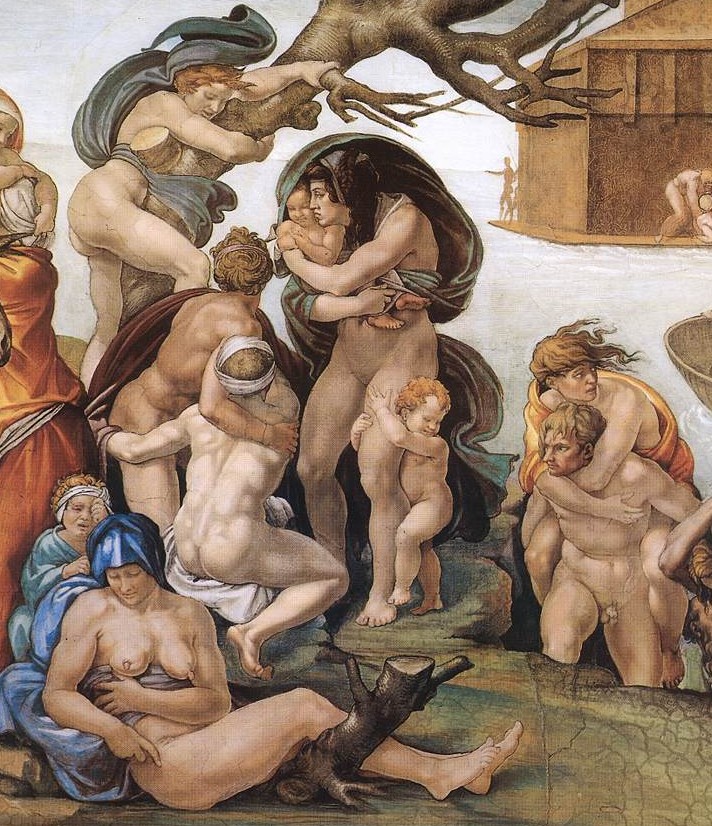
Another of the biblical images Michelangelo painted was the Noah and the great flood. The Ark in which Noah and his family escapes the great flood is in the background. The people in front of the picture are the ones who are trying to escape the flood.

Thursday, July 16, 2009

Adam and Eve of the Sistine Chapel


Michelangelo painted three panels that included Adam and Eve that are found in the second and third chapters of Genesis.
The first panel is when God is reaching out to Adam about to give him life. This is the most famous and most recognized of the Sistine Chapel. The Central panel is God creating Eve from a sleeping Adam. The last panel shows Eve taking the forbidden fruit from the serpent, Satan and Adam taking the fruit from the tree. It also has the scene of Adam and Eve being kicked out of the Garden of Eve.

Monday, July 13, 2009

The Sistine Chapel

Blueprint of the Chapel


While Michelangelo was waiting to be paid for all his work that he had for the Catholic Church, the Church came to him and basically said, "if you don't do this painting for me, I will not pay you your money."Michelangelo painted the Sistine Chapel between 1508 and 1512. The Sistine chapel is the location for Papal Conclaves and many important service.
It has been told that Michelangelo hardly ever left the Chapel while he was painting it. He would sleep on the scaffolding at night. He would also have his food brought to him and he would eat while he was painting. He hardly ever showered or change clothes. Supposedly, when he would finally take off his boots, pieces of skin would come off because he had been wearing them for so long.
The Sistine Chapel painting mainly consists of 9 stories from the book of Genesis, 12 prophetic figures, and the Last Judgment. The 9 stories from the book of Genesis are:
  1. The Separation of Light and Darkness
  2. The Creation of the Sun, Moon and Earth
  3. The Separation of Land and Water
  4. The Creation of Adam
  5. The Creation of Eve
  6. The Temptation and Expulsion
  7. The Sacrifice of Noah
  8. The Great Flood
  9. The Drunkenness of Noah
(Pictures of some of these will be included in a later post)

The Twelve prophets are:
  1. Jonah
  2. Jeremiah
  3. Persian Sibyl
  4. Ezekiel
  5. Erythraean Sibyl.
  6. Joel
  7. Zechriah
  8. Delphic Sibyl
  9. Isaiah
  10. Cumaean Sibyl
  11. Daniel
  12. Libyan Sibyl

Friday, July 10, 2009

The Moses

After finishing the David, Michelangelo returned to work on the tomb of Pope Julius the 2nd. As part of the tomb, he carved a statue of the Biblical Moses. One thing that sticks out about this Moses is his horns. In the translation of the Bible from Hebrew into Latin there was a mistranslation. Instead of the text saying Moses had "something" sticking out of his head. The Bible said Moses had "horns" sticking out of his head.

Besides the Moses, Pope Julius tomb contained many other pieces. He took 34 marbles for the whole tomb. Michelangelo had to pay for all of it out his own pocket. The Catholic Church was suppose to pay him back. They were very slow to do so and in never fully paid him back. He stuck around in Rome hoping to get his payment.

Wednesday, July 8, 2009

The David


After Michelangelo finished the Pieta, he returned to Florence to work on a piece called the David. He worked on it from 1501-1504. Many other editions of David, he shown after the victory of slaying Goliath. Michelangelo did not do this. Instead he carved David before the fight contemplating the fight that was about to come. The block of marble that David was carved from so huge that it could not be brought down from the mountain. Instead Michelangelo had to design and oversee the buidling of a new road from quarry down the mountain. People were so impressed with the statue they decided to put it in the town plaza instead of top of the cathedral. The original now stands in Florence. A duplicate stands in the town square.

Thursday, July 2, 2009

Pieta

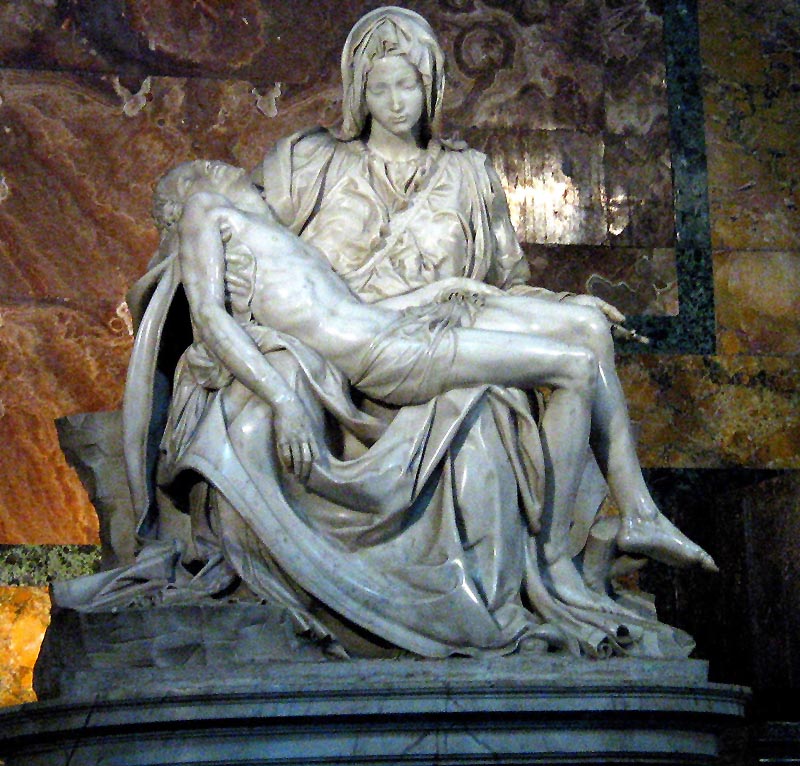
When Michelangelo arrived in Rome, he was asked by a cardinal to sculpt a Pieta. This is a statue of the Virgin Mary holding the body of her dead son, Jesus Christ, on her lap. When he finished this work, it received much attention and recognition. It is credited to be the greatest Pieta ever made.


Michelangelo did not sign his name on his artwork very often. But one night he overheard a man give credit of the Pieta to another sculptor. He became enraged. He wanted to make sure this did not happen again. He returned to his Pieta with his carving tools and carved his name on the sash across Mary's chest.


This is one my favorite pieces of Michelangelo. I think it shows emotions and feelings so well. The vein's in Christ's hands are so realistic.